
Sign up for our newsletter
Subscribe to our emails

Don't Get Got! is a party game in which each player receives six secret missions. The first player to complete three of these missions wins. You don't sit at a table to complete missions, though. This game is designed to run in the background of whatever else you have going on, which means you can play it anywhere — at home, on holiday, in the office, or yes, at a party. Mission examples include getting a player to compliment your hair, hiding this card in a jar and getting another player to open it for you;, and making up a word and getting a player to ask what it means.
£10.00 £9.00
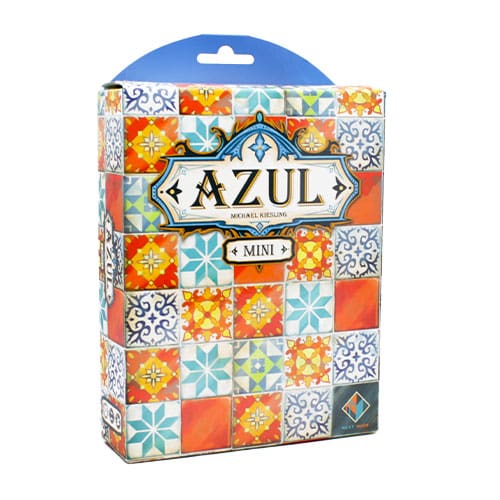
In the game Azul, players take turns drafting coloured tiles from suppliers to their player board. Later in the round, players score points based on how they've placed their tiles to decorate the palace. Extra points are scored for specific patterns and completing sets; wasted supplies harm the player's score. The player with the most points at the end of the game wins.
£19.99 £18.00
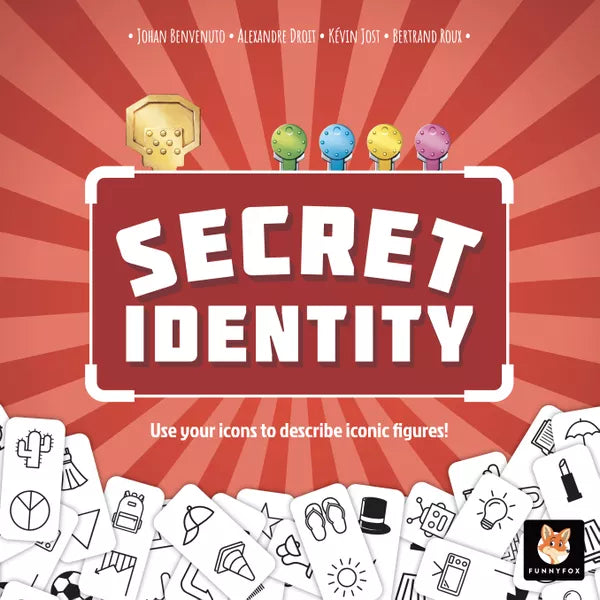
ln Secret Identity, you must guess the hidden identity of your opponents while trying to make them guess yours. At the start of a round, you receive a key card that indicates your identity among the eight characters on the table. Using double-sided "picto" cards, you try to give clues to your character so that others can guess who you are, while simultaneously guessing their character — earning points for each success. Each round, new characters appear on the table, giving you and everyone else a fresh face to guess, but your supply of picto cards is never replenished, so you must be judicious when using them in order not to run out by game's end. After the fourth round, whoever has scored the most points wins. Will you be able to act both as a skilled informant and a sharp observer?
£27.00 £24.30
Created by Tim Ferriss, the mind behind The 4-Hour Workweek, Tools of Titans, and more, this card game gets everyone locked in and laughing. It’s simple to learn but hard to master (hat tip to Nolan Bushnell).Each card has an action and a word. Lay out a line of cards and take turns, performing and saying each card. Add “coyote” cards to sabotage the other players and make the game harder. Mess up the sequence, and you're out. The last player standing wins! Unleash your trickster spirit with a game that's fast, chaotic, and different every time you play.It's great brain training and perfect for friends’ or family game night.—description from the publisher
£14.99 £13.50
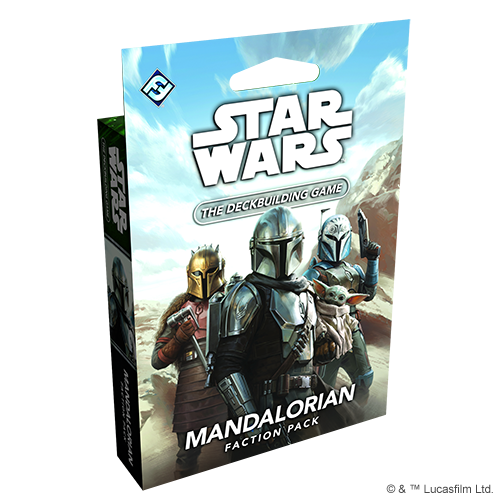
Expand your Star Wars: The Deckbuilding Game collection with the Mandalorian Faction Pack! This pack comes with everything you need to add the Mandalorian faction to your copy of the game, including new base cards, starter cards, and cards for the galaxy deck. Also included are special rules and neutral cards that allow you to play an all-new, 3-player, free-for-all variant game mode! An expansion for Star Wars: The Deckbuilding Game that introduces the Mandalorian faction to the game.Take command of iconic Mandalorian characters and their unique playstyle focused around attacking enemy cards in the galaxy row and gaining strength while the Force is balanced.Brand-new 3-player rules—accompanied by some special neutral cards—add a free-for-all mode to the game, allowing you to vie for victory against two other players at once!Compatible with all of the game’s previous factions, allowing you to mix and match for a custom experience. —description from the publisher
£17.99 £16.20
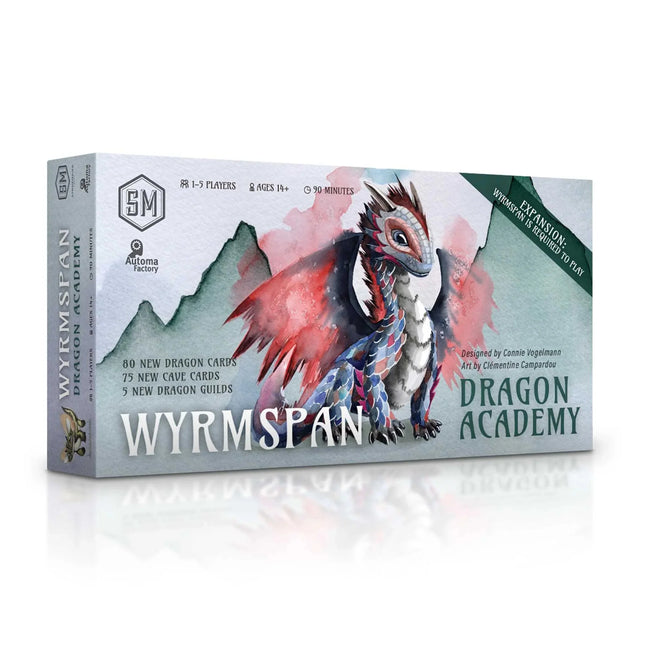
As a budding dracologist, you open an academy for fledgling dragons to achieve their full potential! The expansion to Wyrmspan adds a wide variety of new dragons and caves, objective tiles, dragon guilds, and a new round tracker that presents you with an income choice when you pass for the round. Welcome to Wyrmspan: Dragon Academy, designed by Connie Vogelmann and illustrated by Clémentine Campardou! —description from the publisher
£27.99 £24.20
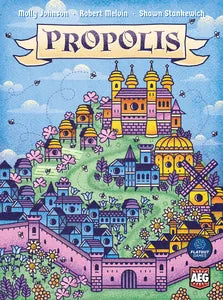
Propolis is a worker-placement, engine-building, area-control, and tableau-building game. Players take on the role of competing medieval bee colonies and take turns deploying worker bees to collect pollen, fortify their positions, and construct their hives to appease their queen and become the most glorious in the land! As bees compete over the realm's floral landscapes, they will be collecting pollen to create the propolis they need to build their hives. Attaining dominance in different realms provides additional glory and building materials. As hives expand, new structures provide additional resources, new scoring opportunities, and the prerequisites to construct a glorious palace for the queen. The player who dominates the realm and builds the most prestigious home wins.
£25.00 £22.50
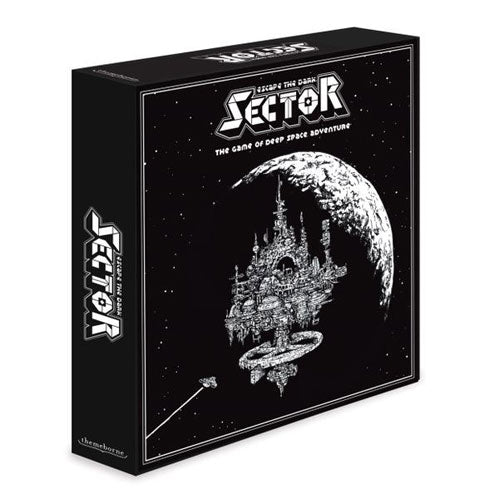
The second game in the Escape the Dark series, Escape the Dark Sector is a simple, sci-fi adventure game with a focus on atmosphere, storytelling and player cooperation – perfect for newcomers to tabletop gaming. It takes about 2 minutes to set up, lasts around 45 minutes, and no two games are ever the same. Playing as the beleaguered crew of an impounded starship, players find themselves confined to the detention block of a vast space station. Using a variety of advanced gear and weaponry, they will embark on a desperate mission to find their ship and blast their way home. Along the way, the crew will have to overcome a variety of dangers, traps, and terrors. From cyborg guards and faulty replicators to killer alien organisms, each challenge is represented by a large, beautifully illustrated chapter card. As these immersive chapter cards are revealed one by one, the game takes on the form of a shared storybook experience, with the players making decisions about what to do each chapter before using a combination of dice and item cards to complete the task before them. The goal of the game is to complete every chapter, and then defeat the final boss. To win, you must keep each member of the crew alive; if any player is killed, the game ends immediately!
£40.00 £36.00

SCOUT is a ladder-climbing game in which cards have two potential values, players may not rearrange their hand of cards, and players may pass their turn to take a card from the current high set of cards into their hand. More specifically, cards are dual-indexed, with different values on each half of the card, with the 45 cards having all possible combinations of the numbers 1-10. During set-up, whoever is shuffling the cards should randomize both the order of the cards in the deck and their orientation. Once each player has been dealt their entire hand of cards, they pick up that hand without rearranging any of the cards; if they wish, they can rotate their entire hand of cards in order to use the values on the other end of each card, but again they cannot rearrange the order of cards in their hand. On a turn, a player takes one of two actions: • Play: A player chooses one or more adjacent cards in their hand that have all the same value or that have values in consecutive order (whether ascending or descending), then they play this set of cards to the table. They can do this only if the table is empty (as on the first turn) or the set they're playing is ranked higher than the set currently on the table; a set is higher if it has more cards or has cards of the same value instead of consecutive cards or has a set of the same quantity and type but with higher values. In this latter case when a player overplays another set, the player captures the cards in this previous set and places them face down in front of themselves. • Scout: A player takes a card from either end of the set currently on the table and places it anywhere they wish in their hand in either orientation. Whoever played this previous set receives a 1 VP token as a reward for playing a set that wasn't beaten. Once per round, a player can scout, then immediately play. When a player has emptied their hand of cards or all but one player have scouted instead of playing, the round ends. Players receive 1 VP for each face-down card, then subtract one point for each card in their hand (except if they were the player scouted repeatedly to end the game). Play as many rounds as the number of players, then whoever has the most points wins.
£20.00 £18.00

Seaside is a game that features only wooden tokens, and being lightweight and super portable, can be played everywhere. Bring it along on your next adventure! The sun is shining as a light, salty wind sends cottony clouds scudding across the sky. Sandpipers filling their bellies with strange insects, crabs hiding under piles of rocks, seashells washed up on the beach, curling waves that break along the beach. Nature in its simplest beauty. 1. Draw a token from the bag and choose a side 2. Apply its effect and collect as many tokens as you can 3. Take some risks... The highest stack of tokens at the end wins! Create your Seaside with the elements the sea sends your way, one token at a time. Take advantage of opportunities to snatch as many tokens as you can each turn. At the end of the game, stack everything you collected, and the player with the highest pile wins the game. • UNBEATABLE PORTABILITY - Windproof and water-resistant components make for perfect for outdoor play. The game is simply wooden tokens in a fabric bag, so you can take it anywhere! • EASY-TO-LEARN GAMEPLAY - Just grab a token, pick a side, and apply the effect. Whether you’re a seasoned gamer or a beginner, quick and easy rules mean you can jump right in and start having fun. • STRATEGIC AND COMPETITIVE - While easy to learn, Seaside offers depth with tactical decisions on token collection and timing, creating a competitive experience. • IMMERSE YOURSELF IN NATURE - Transport yourself to seaside ecosystem with sandy beaches, seashells, and waves—an ideal way to unwind and relax as you create your own seaside haven. • STACK AND WIN - The goal is simple: The highest stack wins! Pile them up at the end to see who won! Contents: 1 Bag 70 Wooden Tokens 1 Player Aid 1 Rulebook
£25.00 £22.50
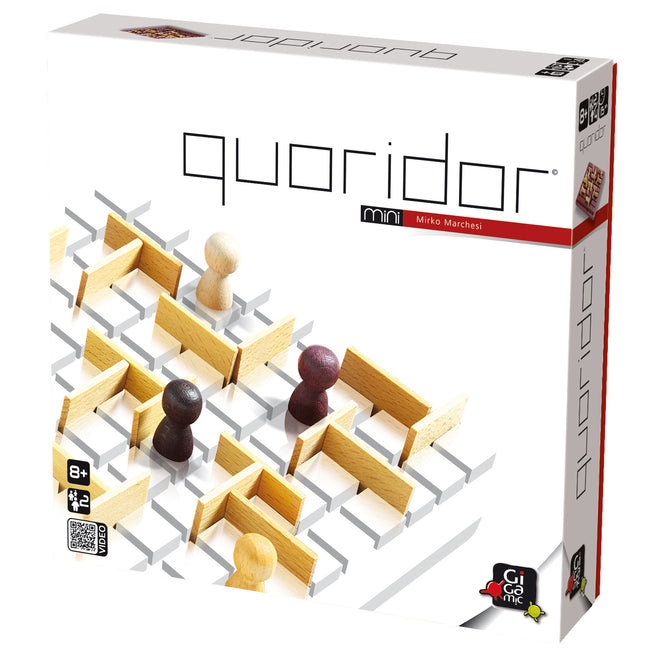
Quoridor Mini is a must among strategy games. Its rules are amazingly simple: just make it through the labyrinths your opponent creates to get to the other side. This game requires strategy and quick thinking for two players and offers a load of fun for four... Both occasional and expert players from around the world recognize the fun and exceptional strategic aspects of Quoridor. Quoridor Mini (18x18cm) is the smaller edition of the original to Quoridor (28x28cm)
£22.00 £19.80
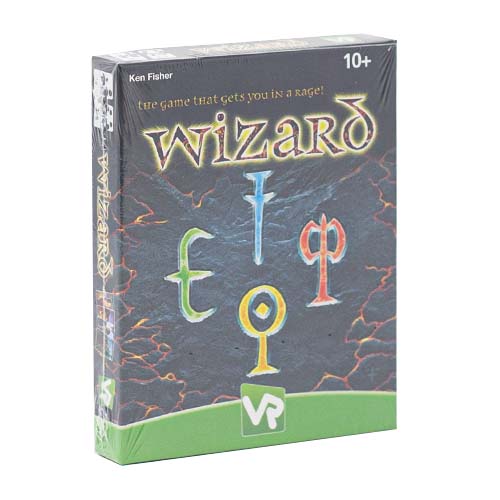
The trick-taking game Wizard uses a sixty-card deck that consists of the traditional 52-card deck (1-13 in four suits) along with four Wizards (high) and four Jesters (low).Players compete over multiple rounds based on the number of players, and whoever ends with the highest score wins. In each round, players are dealt a hand of cards — one card in the first round, two cards in the second, three in the third, etc. — then trump is determined by flipping the top card of the undealt deck; if a suit is revealed, that suit is trump, while if the card turned up is a Jester, it is turned down and there is no trump for that round. If the card turned up is a Wizard, the dealer chooses one of the 4 suits as the trump suit. The dealer cannot choose "no trump". On the last round of each game all cards are dealt out so there is no trump. Players then state how many tricks they expect to win in the round.The playing and winning of the tricks uses mostly standard trick-taking rules. If a player leads a suited card, then all other players must follow suit, if possible. If a player leads a Jester, then the second player determines the suit led. If a player leads a Wizard, then those who follow can play whatever they want. However, in all cases a player may always play a Wizard or Jester, even if they hold cards in the suit led.After each player has played a card, determine the winner of the trick as follows: If one or more Wizards were played, the player of the first Wizard wins the trick, collects the cards, and leads to the next trick. If not, whoever played the highest trump wins the trick. If not, whoever played the highest card of the suit led wins the trick. If all players played Jesters, whoever played the first Jester wins.After all tricks have been played, players tally their score for the round. If a player matched their bid, winning exactly as many tricks as stated at the start of the round, they score 20 points, plus 10 points for each trick taken. If a player missed their bid, they lose 10 points for each trick that they were off, whether they took more or fewer than predicted.A common variant in Wizard is to not allow the total number of tricks bid in a round to match the round number, thereby forcing (at least) one player to be off each round.
£10.00
Subscribe to our emails