
Sign up for our newsletter
Subscribe to our emails
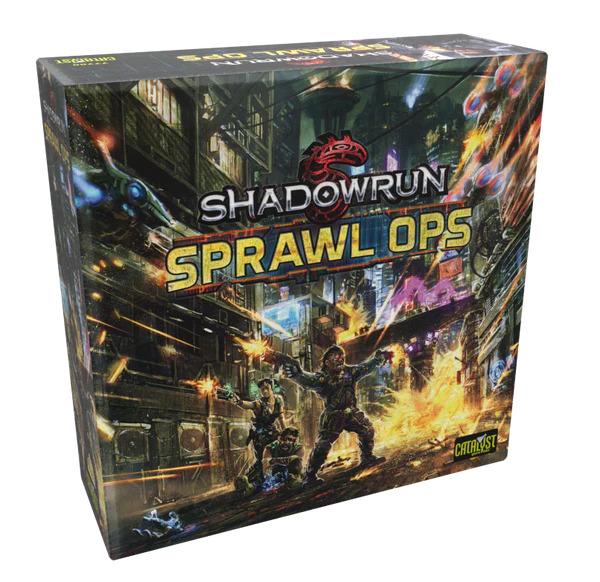
Shadowrun: Sprawl Ops is a competitive game for 2 to 4 players that can be played in 60 to 90 minutes. In this cyber-punk worker-placement game, each player controls a team of Shadow Runners that they can send on missions, loan to other players (for a fee, of course), and upgrade with new tech and equipment. Missions are resolved by rolling combinations of custom dice. A diverse team of Shadow Runners gives you access to more combinations of dice, and your upgrades add even more dice to your pool. Take on smaller missions to earn creds. Then, put those right back into more experienced runners, and better gear. Once you think you've got what it takes, send your runners out to attempt to collect one final score. If you fail, don't worry, your doc-wagon contracts will keep your runners in the game. The first player to successfully complete the final mission, and collect that last big score wins the game!
£47.99 £33.60
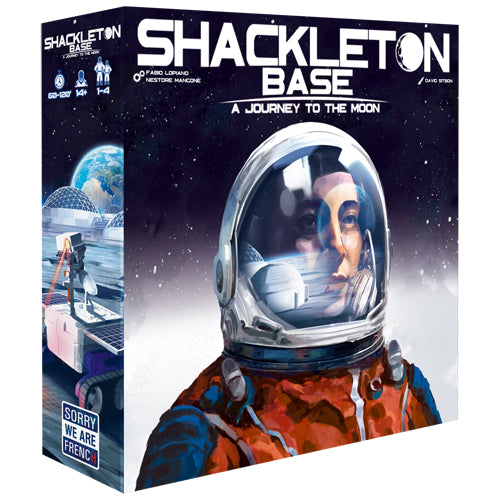
A permanent base is being built in the Shackleton crater at the Moon's South Pole. You're leading one of the space agencies that are working together to expand their presence on the base, while at the same time the three major corporations sponsoring the mission are each pursuing their own agenda. In Shackleton Base: A Journey to the Moon, you will build structures on the base, while also funding projects from the corporations that provide special abilities and scoring opportunities.At the start of the game, pick three corporations randomly from the seven available. Each corporation introduces new projects, actions, and scoring opportunities, along with their specific mechanisms. The game is played over three rounds, each divided into three phases:• Shuttle phase: Each player drafts a shuttle tile from an open display to determine which type of astronauts and resources they can use that round, as well as the turn order for the next phase.• Action phase: Players take turns deploying their astronauts on the moon to collect resources, build structures, or fund projects. Depending on which corporations were selected, different types of resources will be available, resources that can be used in various ways for the projects or to build structures. Each project provides ongoing abilities and scoring opportunities. Each corporation provides different ways to score points, which could be during the action phase, the maintenance phase, or at game's end.• Maintenance phase: Deployed astronauts are assigned to work on the structures (providing a bonus to the player owning them), then players collect income and pay maintenance costs. If corporations in play have end-round effects, those effects take place.The end of the game brings a final scoring, then the player with the most points wins.
£65.00 £58.50
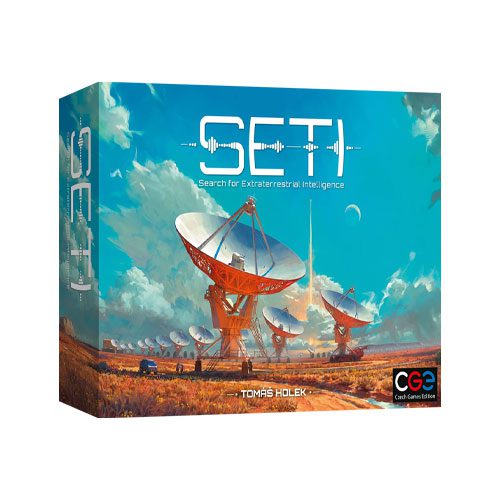
In SETI: Search for Extraterrestrial Intelligence, a eurogame for 1–4 players, you lead a scientific institution tasked with searching for traces of life beyond planet Earth. The game draws inspiration from current or emerging technologies and efforts in space exploration.Players will explore nearby planets and their moons by launching probes from Earth while taking advantage of ever-shifting planetary positions. Decide whether to land on their surface to collect valuable samples, or stay in orbit for a broader survey. Additionally, by directing your telescopes to gaze into distant star systems, you may detect traces of alien signals or undiscovered exoplanets, and collect promising data to examine and study back home.Back on Earth, you can invest in upgrading your equipment so you can analyze incoming data more efficiently, boost your telescope signal capacity, or increase your supply of resources—all to expand the scope of your search that could lead to a discovery of extraterrestrial life forms.You will also make use of over 200 cards to aid your efforts or focus your research in a particular direction for additional bonuses and rewards. Each card has unique effects and illustrations and depicts real-life technologies, projects, and discoveries (like the ISS, Large Hadron Collider, Perseverance rover, Voyager probe, and many more).Finding traces of extraterrestrial life is only a matter of time—utilize the resources you have at your disposal strategically and you may well end up being the one to make the biggest scientific contribution towards advancing our understanding of alien life within our galaxy.SETI: Search for Extraterrestrial Intelligence pays homage to space and planetary exploration, astronomy, the ongoing search for signs of life in the vastness of space, and efforts to understand the nature of life in the universe.—description from the publisher
£67.49 £60.80
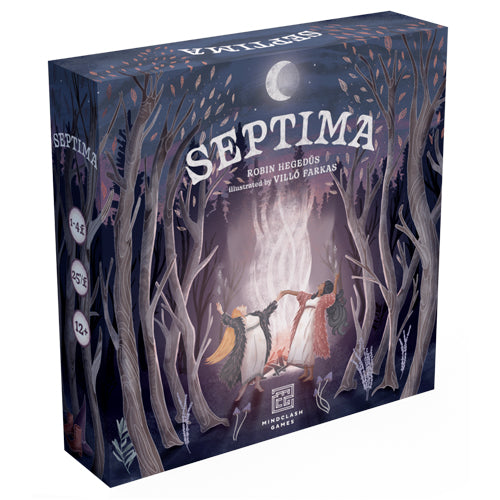
Only in a few corners of the world is the memory of magic still alive, even though a few centuries ago its healing power permeated everything. Witches, its last remaining practitioners, have always been outcasts and could help human society only in strict secrecy. The leader of their people, the Septima, has always been the wisest, most knowledgeable witch. Now, as her time is coming to an end, witches from all over the world gather at Noctenburg to leave their mark on the hostile town and prove to the Septima that they are her worthy successor.Septima is a competitive, highly interactive strategy game of witchcraft. As the leader of your coven, you must prove your worth in the town of Noctenburg to become the successor of Septima, the High Witch. Practice your craft and gain Wisdom by collecting herbs, brewing potions, healing the townsfolk, mastering charms and rescuing your fellow brothers and sisters from the trials. But beware: magic, even if used for good, invokes suspicion in the townsfolk...Simultaneous action selection with positive player interaction: Septima’s central mechanism revolves around the simultaneous, secret selection of one of nine Action cards each turn: Move, Collect, Brew, Heal, Recruit, Plea, Chant, Rite and Remember. Each Action gets a powerful bonus if it is chosen by multiple players, but performing them together also raises suspicion in the townsfolk and attracts the attention of the Witch Hunters. Decisions of when to do a shared action (and who to do it with) adds a fresh, semi-cooperative touch to a competitive game, and lots of player interaction.Rescue witches to build your Coven: Heal, enthrall or convince the townsfolk and amass enough support to sway the periodic Witch Trials in your favor. If the hostile witnesses are outvoted, the convicted witch is absolved and joins the coven that rescued them. You start small but you can grow your coven to up to four witches this way, each with their own personality and special ability to help your cause. Reckless Witches caught by Witch Hunters are also put to trial, so with enough support from the townsfolk, even witches from other, less careful players’ coven can end up in yours.Accessible, intuitive and familiar: Septima is Mindclash Games’ most accessible title to date, with beautiful, hand-drawn art style by Villő Farkas and with the character art of Barbara Bernát, wooden components and intuitive, theme-inspired mechanisms. It is very quick to teach and set up, and takes less than 2 hours to play, even with four players.
£58.50
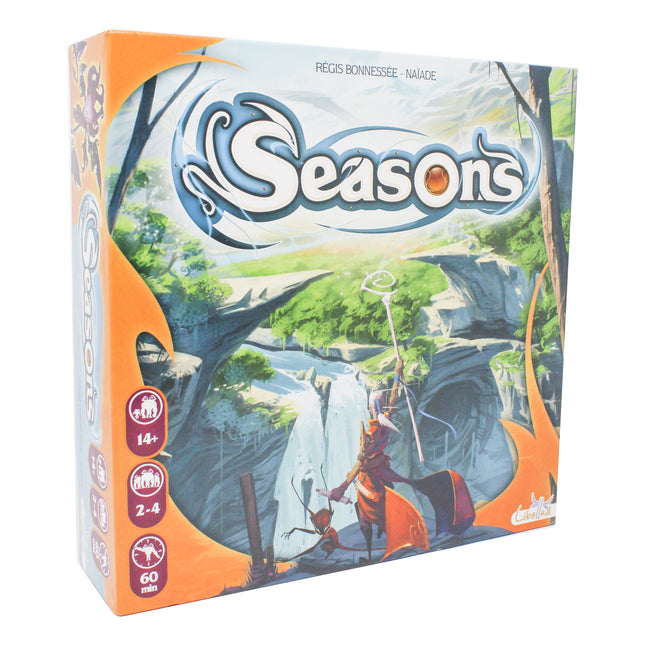
The greatest sorcerers of the kingdom have gathered at the heart of the Argos forest, where the legendary tournament of the 12 seasons is taking place. At the end of the three year competition, the new archmage of the kingdom of Xidit will be chosen from among the competitors. Take your place, wizard! Equip your ancestral magical items, summon your most faithful familiars to your side and be ready to face the challenge!Seasons is a tactical game of cards and dice which takes place in two phases:The first phase "Prelude" consists of a card draft: the goal during this phase will be to establish your own 9-card deck for the main part of the game and with it the strategy.Once the Prelude is complete, each player must separate their 9 cards into 3 packs of 3 cards. They will begin the second phase of the game with their first pack of three cards, then gradually as the game progresses, they will receive the other two packets of three cards.Next comes the Tournament: at the beginning of each round a player will roll the seasons dice (dice = number of players +1).These cubes offer a variety of actions to the players: - Increase your gauge (maximum number of cards you may have placed on the table and in play) - Harvesting energy (water, earth, fire, air) to pay the cost of power cards- Crystallizing the energy (during the current season) to collect crystals. Crystals serve both as a resource to pay for some cards, but also as victory points in the end. - Draw new cardsEach player can choose only one die per turn. The die not chosen by anyone determines how many fields the "time track" would move forward.In addition, all the dice are different depending on the season. For example, there are not the same energies to a particular season. Throughout the game, players will therefore have to adapt to these changes - also the "exchange rates" of energy to crystals vary during seasons - the energy not present on the dice in any given season is also the best paid during the season.At the end of the game, the crystals are summed with victory points granted by the cards (minus some penalties, where applicable). The highest score wins.
£48.00 £43.20
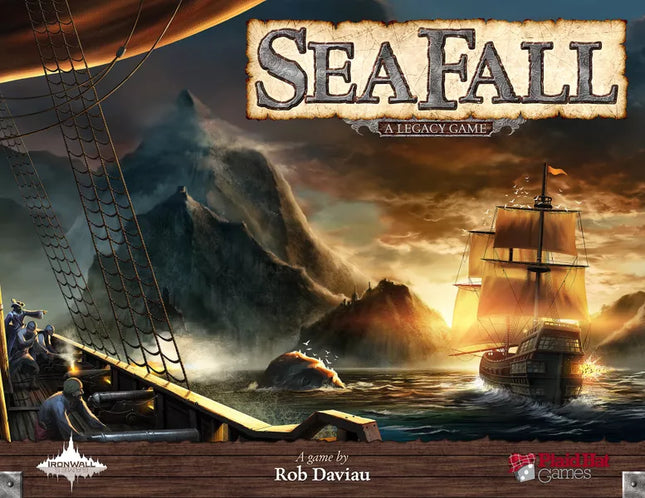
UNSEALED. CONTENTS COMPLETE AND INTACT.SeaFall is a 4X-inspired game (without player elimination/extermination) set in an "age of sail" world reminiscent of our world.In SeaFall, the world is starting to claw its way out of a dark age and has begun to rediscover seafaring technology. Players take on the role of a mainland empire that consults with a consortium of advisors to discover new islands, explore those islands, develop trade, send out raiding parties, take part in ship-to-ship combat, and more. As in Risk Legacy and Pandemic Legacy, co-designed by Rob Daviau, SeaFall evolves as the game is played, setting their grudges into the history of the game and building a different narrative at every table as players open up the world.Due to the complexity of rules interactions in this game, the community (primarily Becq) has created a FAQ called The Captain's Log.
£73.99 £46.70

It is a time of unrest in 1920s Europa. The ashes from the first great war still darken the snow. The capitalistic city-state known simply as “The Factory”, which fuelled the war with heavily armoured mechs, has closed its doors, drawing the attention of several nearby countries.Scythe is an engine-building game set in an alternate-history 1920s period. It is a time of farming and war, broken hearts and rusted gears, innovation and valor. In Scythe, each player represents a character from one of five factions of Eastern Europe who are attempting to earn their fortune and claim their faction's stake in the land around the mysterious Factory. Players conquer territory, enlist new recruits, reap resources, gain villagers, build structures, and activate monstrous mechs.Each player begins the game with different resources (power, coins, combat acumen, and popularity), a different starting location, and a hidden goal. Starting positions are specially calibrated to contribute to each faction’s uniqueness and the asymmetrical nature of the game (each faction always starts in the same place).Scythe gives players almost complete control over their fate. Other than each player’s individual hidden objective card, the only elements of luck or variability are “encounter” cards that players will draw as they interact with the citizens of newly explored lands. Each encounter card provides the player with several options, allowing them to mitigate the luck of the draw through their selection. Combat is also driven by choices, not luck or randomness.Scythe uses a streamlined action-selection mechanism (no rounds or phases) to keep gameplay moving at a brisk pace and reduce downtime between turns. While there is plenty of direct conflict for players who seek it, there is no player elimination.Every part of Scythe has an aspect of engine-building to it. Players can upgrade actions to become more efficient, build structures that improve their position on the map, enlist new recruits to enhance character abilities, activate mechs to deter opponents from invading, and expand their borders to reap greater types and quantities of resources. These engine-building aspects create a sense of momentum and progress throughout the game. The order in which players improve their engine adds to the unique feel of each game, even when playing one faction multiple times.
£80.00 £72.00

In this classic word game, players use their seven drawn letter-tiles to form words on the gameboard. Each word laid out earns points based on the commonality of the letters used, with certain board spaces giving bonuses. But a word can only be played if it uses at least one already-played tile or adds to an already-played word. This leads to slightly tactical play, as potential words are rejected because they would give an opponent too much access to the better bonus spaces.
£21.99 £19.80

In Scotland Yard, one of the players takes on the role of Mr. X. His job is to move from point to point around the map of London taking taxis, buses or subways. The detectives – that is, the remaining players acting in concert – move around similarly in an effort to move into the same space as Mr. X. But while the criminal's mode of transportation is nearly always known, his exact location is only known intermittently throughout the game.The 125 fare tickets are 5 black, 23 pink underground, 43 green bus, 54 yellow taxi.Similar to The Fury of Dracula Clue: The Great Museum Caper Ghost Chase Letters from Whitechapel Garibaldi: The Escape
£28.00 £25.20

A new pathology has just appeared! Patient Zero has been identified, and it's up to you to find the antidote as soon as possible to save the patient and humanity!Save Patient Zero pits two labs against each other. Each lab employs one or two scientists (i.e., players), while another player plays a lab computer named Savvy. The labs compete to identify an antidote of three molecules, with the labs typically sharing no information with one another; whichever lab finds the antidote first wins.The general idea of the game is to use lab tools in the best sequence possible to identify the three molecules out of 25 that make up the antidote. (These 25 molecules are arranged in a 5x5 grid on each lab's worksheet.) At the start of the game, Savvy looks at the top three molecule cards in that deck, then sets them aside. These are the molecules the labs must identify. On a turn, each lab submits a tool card to Savvy to show what they want to do in the round, and whichever lab submits first takes its action first in that round. Actions include: Samply: Draw three sample cards from your lab's deck, and give them to Savvy. Each sample card depicts five molecules, and Savvy will identify which of them show at least one molecule used in the antidote. Mikroskopo: Choose two cards from your lab's deck, and give them to Savvy, who will treat them like the cards in "Samply". Dedukto: Receive five molecule cards from Savvy. You (but not the other lab) now know these molecules are not in the antidote. Centrofugo: Place your centrifuge on your lab worksheet so that it points to four molecules. Savvy then indicates whether any of these molecules are in the antidote. Scanpad: Place a cardboard device on your worksheet to highlight six molecules in a 2x3 grid. Savvy then indicates how many molecules highlighted (0-3) are part of the antidote. Spionado: Savvy takes two lab cards from the opposing lab that do not have any molecules in the antidote on them, then shows them to you. Antidote: Circle three molecules on your worksheet. If all three are in the antidote, you win! If not, Savvy will indicate how many of the circled molecules are in the antidote.Each lab has a limited number of actions in its deck — eighteen total, with three Samply, two Dedukto, one Scanpad, two Antidote, etc. — so use them wisely, especially the Antidote because if you fail to identify the correct three molecules a second time, then your lab loses the game automatically.To play Save Patient Zero as a two-player game, each lab draws three molecule cards from the deck, and the opposing lab must identify these three molecules before you can identify the three molecules they drew. Each lab takes the role of Savvy for the opposing lab.
£33.99 £23.80
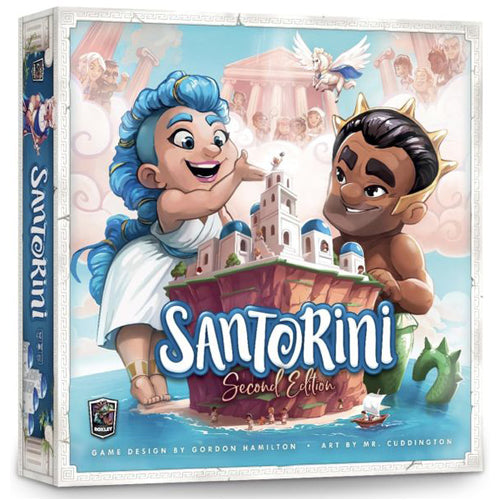
Santorini is an accessible strategy game, simple enough for an elementary school classroom while aiming to provide gameplay depth and content for hardcore gamers to explore, The rules are simple. Each turn consists of 2 steps: 1. Move - move one of your builders into a neighboring space. You may move your Builder Pawn on the same level, step-up one level, or step down any number of levels. 2. Build - Then construct a building level adjacent to the builder you moved. When building on top of the third level, place a dome instead, removing that space from play. Winning the game - If either of your builders reaches the third level, you win. Variable player powers - Santorini features variable player powers layered over an otherwise abstract game, with 40 thematic god and hero powers that fundamentally change the way the game is played.
£48.00 £43.20
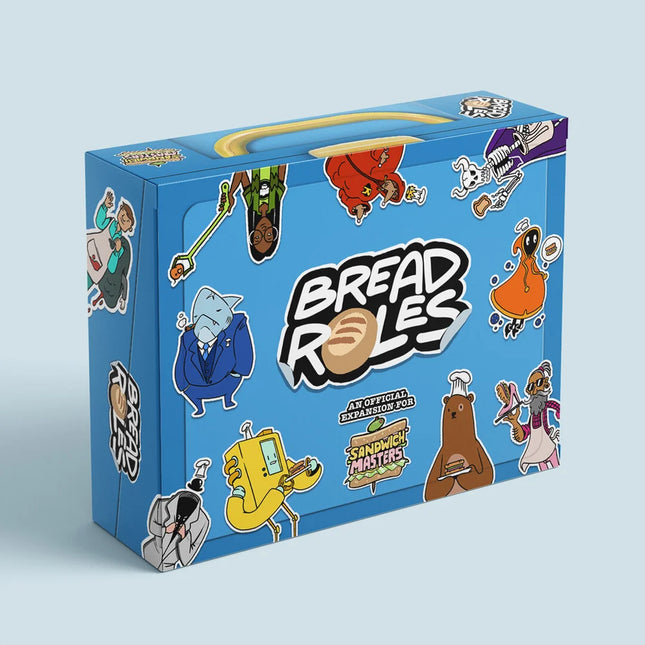
Bread Roles brings an added layer of chaos to the classic Sandwich Masters experience by introducing 10 new role cards, each of which boasts unique game-bending powers. What's more, Bread Roles allows six people to play together for the first time by adding extra cards to the core game.Assume the identity of the Undercover Health Inspector, Flavatron 5000 or Colin the Bear (among others) and let battle commence. Your name may have changed but the challenge remains the same: defeat your rivals and become the one true Sandwich Master!—description from the publisher
£10.00 £6.00
Subscribe to our emails