
Sign up for our newsletter
Subscribe to our emails
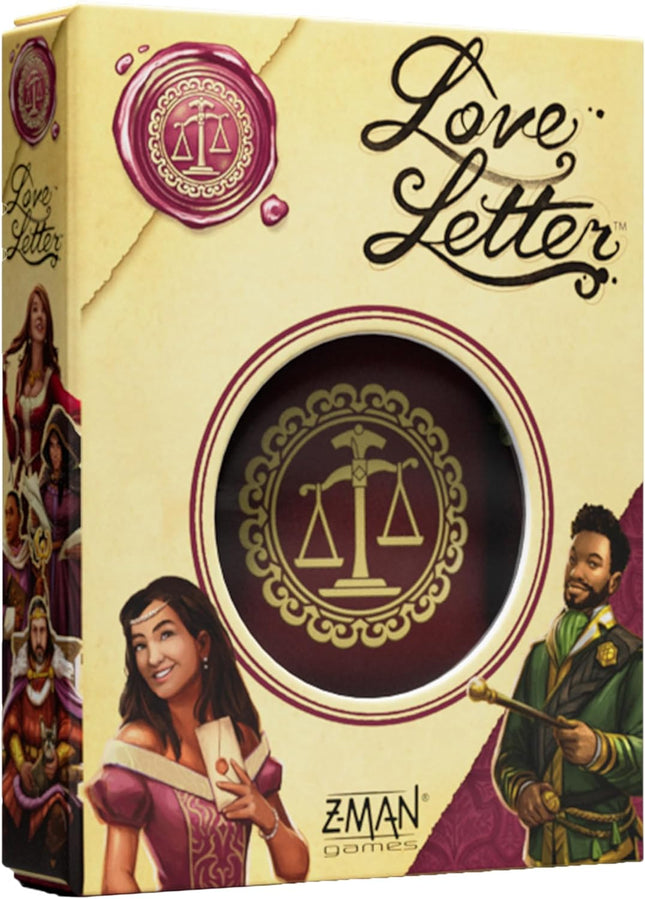
The noble Princess is looking for an ideal partner and confidant to help with her royal duties when she one day assumes the throne. You must prove your worth and gain her trust by enlisting allies, friends, and family of the Princess to carry a letter of intent to her. Can you earn the Princess' trust and become her confidant? Playing cards one at a time, players in Love Letter use the abilities of these key people in the Princess' life to outwit their opponents and successfully deliver their letter and gain her favor. Players must utilize each character's special skill to avoid being caught and successfully deliver their letter to the Princess. Once a set number of favor tokens are acquired, that player wins and becomes the Princess' confidant. This 2019 edition of Love Letter features new artwork by Citadels artist Andrew Bosley, screen-printed tokens, and two new characters (five cards in total) that allow for games with up to six players. When played, the Chancellor (value 6) allows you to draw two new cards, add those to your hand, then place two cards of your choice on the bottom of the deck. The Spy (value 0) wins you a favor token if you were the only player to play or discard a spy during the round.
£15.00 £13.50
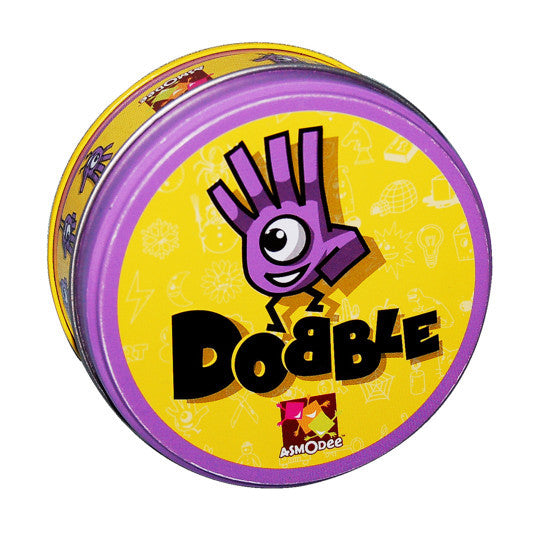
Dobble, is a simple pattern recognition game in which players try to find an image shown on two cards.Each card in original Spot it! features eight different symbols, with the symbols varying in size from one card to the next. Any two cards have exactly one symbol in common. For the basic Spot it! game, reveal one card, then another. Whoever spots the symbol in common on both cards claims the first card, then another card is revealed for players to search, and so on. Whoever has collected the most cards when the 55-card deck runs out wins!
£13.99 £12.60

Welcome to Mysterium Park!Its cotton candies, its circus, its dark secrets...The park’s former director has disappeared, but the investigation came to nothing. Since that night, weird things are happening on the fairground. As psychics, you’re convinced that a ghost haunts this carnival... You’re now intent on giving it a chance to reveal the truth.In this cooperative stand-alone game, the ghost sends visions with illustrated cards. The psychics try to interpret them in order to rule out certain suspects and locations. Then, they’ll seize their only chance to piece together what happened to the director. You have only six nights before the carnival leaves town... Open your minds and find the truth!Set in the lights of a 1950's US fairground, Mysterium Park shares the same core mechanism with the famous award-winning game it reimplements, though bringing a different approach: it is smaller and faster, thanks to very quick setup and simplified rules.Mysterium is a milestone in immersive and eye-catching experiences close to role-playing; with Mysterium Park, you can enjoy the heart of it in a more condensed way.
£23.99 £21.60
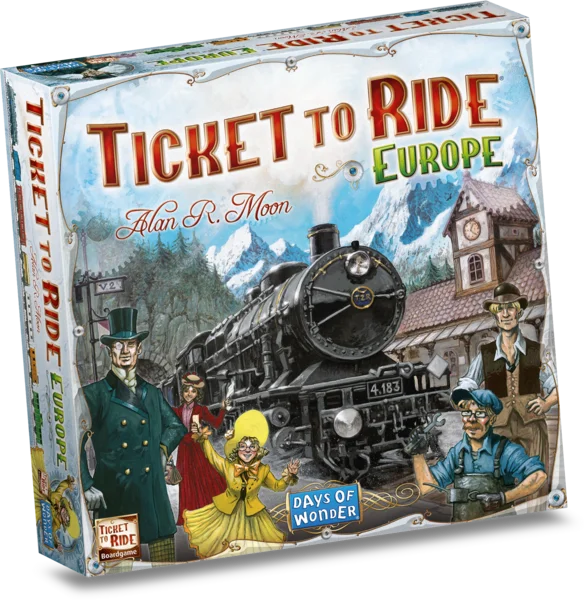
Ticket to Ride: Europe takes you on a new train adventure across Europe. From Edinburgh to Constantinople and from Lisbon to Moscow, you'll visit great cities of turn-of-the-century Europe. Like the original Ticket to Ride, the game remains elegantly simple, can be learned in 5 minutes, and appeals to both families and experienced gamers. Ticket to Ride: Europe is a complete, new game and does not require the original version.More than just a new map, Ticket to Ride: Europe features brand new gameplay elements. Tunnels may require you to pay extra cards to build on them, Ferries require locomotive cards in order to claim them, and Stations allow you to sacrifice a few points in order to use an opponent's route to connect yours. The game also includes larger format cards and Train Station game pieces.The overall goal remains the same: collect and play train cards in order to place your pieces on the board, attempting to connect cities on your ticket cards. Points are earned both from placing trains and completing tickets but uncompleted tickets lose you points. The player who has the most points at the end of the game wins.Part of the Ticket to Ride series.
£44.99 £40.50
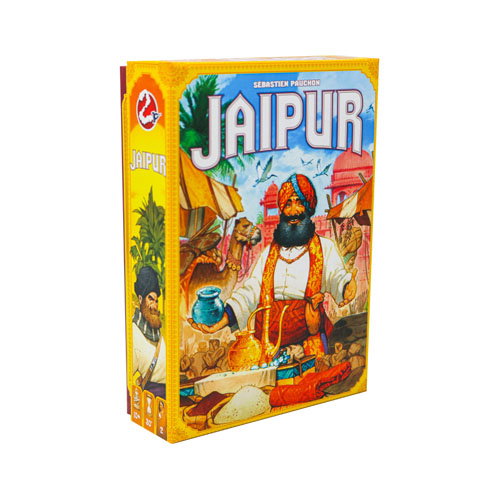
You are one of the two most powerful traders in the city of Jaipur, the capital of Rajasthan, but that's not enough for you because only the merchant with two "seals of excellence" will have the privilege of being invited to the Maharaja's court. You are therefore going to have to do better than your direct competitor by buying, exchanging, and selling at better prices, all while keeping an eye on both your camel herds.Jaipur is a fast-paced card game, a blend of tactics, risk and luck. On your turn, you can either take or sell cards. If you take cards, you have to choose between taking all the camels, taking one card from the market, or swapping 2-5 cards between the market and your cards.If you sell cards, you get to sell only one type of good, and you receive as many chips for that good as the number of cards you sold. The chips' values decrease as the game progresses, so you'd better hurry! On the other hand, you receive increasingly high rewards for selling three, four, or five cards of the same good at a time, so you'd better wait!You can't sell camels, but they're paramount for trading and they're also worth a little something at the end of the round, enough sometimes to secure the win, so you have to use them smartly.
£20.00 £18.00
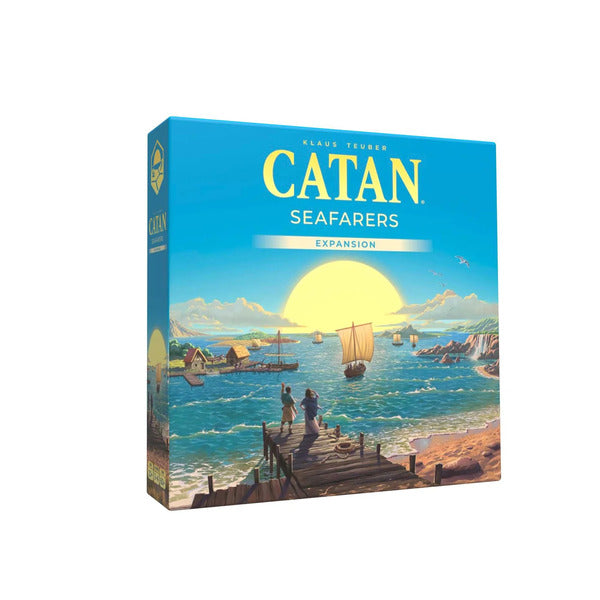
Not everyone’s content with a simple life on the shore. You? Your restless spirit cannot resist the call of the open sea! While your hometown grows and thrives, you and your rival Seafarers seek new thrills, planting fresh roots and building spectacular wonders on smaller islands in the Catanian archipelago. The rumours of gold and resources are so alluring that not even pirates, dense fog, or rough waters will keep you from your goal.
£49.99 £45.00

You are head of a family in an Italian city-state, a city run by a weak and corrupt court. You need to manipulate, bluff and bribe your way to power. Your object is to destroy the influence of all the other families, forcing them into exile. Only one family will survive...In Coup, you want to be the last player with influence in the game, with influence being represented by face-down character cards in your playing area.Each player starts the game with two coins and two influence – i.e., two face-down character cards; the fifteen card deck consists of three copies of five different characters, each with a unique set of powers: Duke: Take three coins from the treasury. Block someone from taking foreign aid. Assassin: Pay three coins and try to assassinate another player's character. Contessa: Block an assassination attempt against yourself. Captain: Take two coins from another player, or block someone from stealing coins from you. Ambassador: Draw two character cards from the Court (the deck), choose which (if any) to exchange with your face-down characters, then return two. Block someone from stealing coins from you.On your turn, you can take any of the actions listed above, regardless of which characters you actually have in front of you, or you can take one of three other actions: Income: Take one coin from the treasury. Foreign aid: Take two coins from the treasury. Coup: Pay seven coins and launch a coup against an opponent, forcing that player to lose an influence. (If you have ten coins or more, you must take this action.)When you take one of the character actions – whether actively on your turn, or defensively in response to someone else's action – that character's action automatically succeeds unless an opponent challenges you. In this case, if you can't (or don't) reveal the appropriate character, you lose an influence, turning one of your characters face-up. Face-up characters cannot be used, and if both of your characters are face-up, you're out of the game.If you do have the character in question and choose to reveal it, the opponent loses an influence, then you shuffle that character into the deck and draw a new one, perhaps getting the same character again and perhaps not.The last player to still have influence – that is, a face-down character – wins the game!A new & optional character called the Inquisitor has been added (currently, the only English edition with the Inquisitor included is the Kickstarter Version from Indie Boards & Cards. Copies in stores may not be the Kickstarter versions and may only be the base game). The Inquisitor character cards may be used to replace the Ambassador cards. Inquisitor: Draw one character card from the Court deck and choose whether or not to exchange it with one of your face-down characters. OR Force an opponent to show you one of their character cards (their choice which). If you wish it, you may then force them to draw a new card from the Court deck. They then shuffle the old card into the Court deck. Block someone from stealing coins from you.
£17.00 £15.30
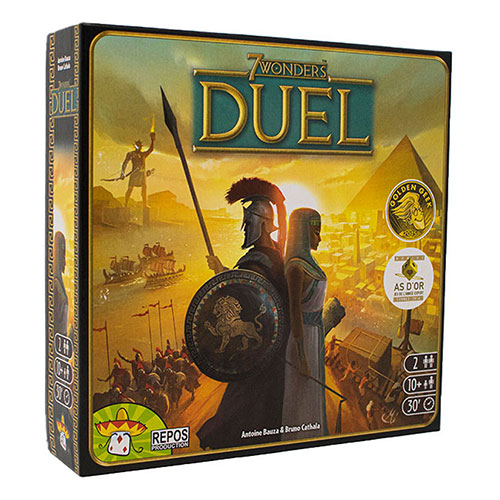
In many ways 7 Wonders Duel resembles its parent game 7 Wonders as over three ages players acquire cards that provide resources or advance their military or scientific development in order to develop a civilization and complete wonders.What's different about 7 Wonders Duel is that, as the title suggests, the game is solely for two players, with the players not drafting cards simultaneously from hands of cards, but from a display of face-down and face-up cards arranged at the start of a round. A player can take a card only if it's not covered by any others, so timing comes into play as well as bonus moves that allow you to take a second card immediately. As in the original game, each card that you acquire can be built, discarded for coins, or used to construct a wonder.Each player starts with four wonder cards, and the construction of a wonder provides its owner with a special ability. Only seven wonders can be built, though, so one player will end up short.Players can purchase resources at any time from the bank, or they can gain cards during the game that provide them with resources for future building; as you acquire resources, the cost for those particular resources increases for your opponent, representing your dominance in this area.A player can win 7 Wonders Duel in one of three ways: each time you acquire a military card, you advance the military marker toward your opponent's capital, giving you a bonus at certain positions; if you reach the opponent's capital, you win the game immediately; similarly, if you acquire any six of seven different scientific symbols, you achieve scientific dominance and win immediately; if none of these situations occurs, then the player with the most points at the end of the game wins.
£24.99 £22.50

Cat Fluxx is the purr-fectly chaotic card game for cat lovers everywhere!This feline-themed version of the classic Fluxx game features nine adorable Cats and their Human, with plenty of whiskered antics. Your cats will bask in Sunbeams, chase Balls of Yarn, and squeeze into Cardboard Boxes—but beware the Empty Food Bowl and dreaded Vacuum Cleaner! With ever-changing rules and endless replayability, Cat Fluxx is the ideal pick for casual game nights full of laughter, mischief, and meows. A cat-themed twist on the classic Fluxx card game Rules change as you play – every game is different Includes 9 unique cats and their human Features funny cards like the Vacuum Cleaner and Food Bowl Great for fans of humor, chaos, and cuddly cats
£19.99 £18.00
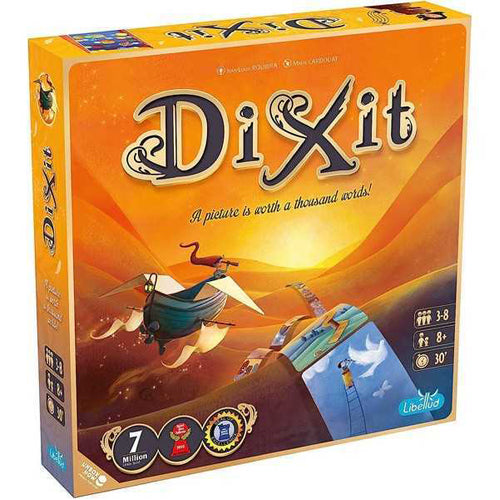
2010 Spiel des Jahres WinnerOne player is the storyteller for the turn and looks at the images on the 6 cards in her hand. From one of these, she makes up a sentence and says it out loud (without showing the card to the other players).Each other player selects the card in their hands which best matches the sentence and gives the selected card to the storyteller, without showing it to the others.The storyteller shuffles her card with all the received cards. All pictures are shown face up and every player has to bet upon which picture was the storyteller's.If nobody or everybody finds the correct card, the storyteller scores 0, and each of the other players scores 2. Otherwise the storyteller and whoever found the correct answer score 3. Players score 1 point for every vote for their own card.The game ends when the deck is empty or if a player scores 30 points. In either case, the player with the most points wins the game.The base game and all expansions have 84 cards each.
£29.99 £27.00
£8.00
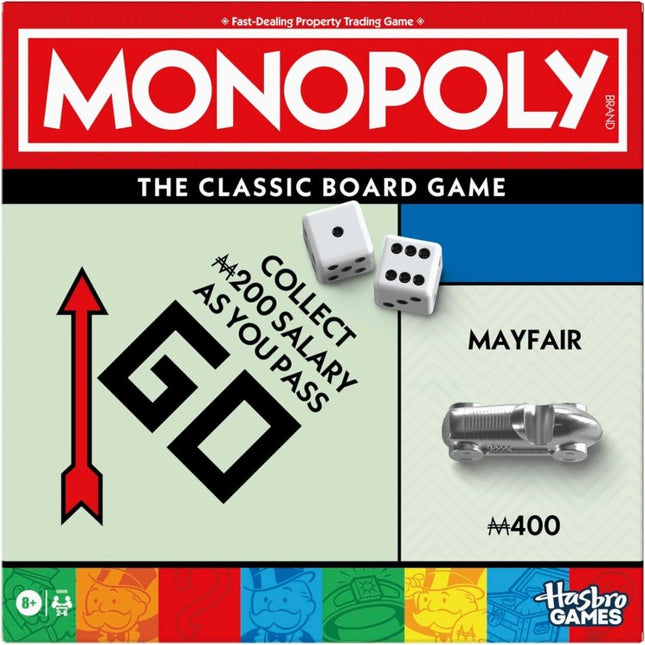
Players take the part of land owners, attempting to buy and then develop their land. Income is gained by other players visiting their properties and money is spent when they visit properties belonging to other players. When times get tough, players may have to mortgage their properties to raise cash for fines, taxes and other misfortunes.On their turn, a player rolls two dice and moves that number of spaces around the board. If the player lands on an as-yet-unowned property, they have the opportunity to buy it and add it to his portfolio or allow the bank to auction it to the highest bidder. If a player owns all the spaces within a colour group, they may then build houses and hotels on these spaces, generating even more income from opponents who land there. If they land on a property owned by another player, they must pay that player rent according to the value of the land and any buildings on it. There are other places on the board which can not be bought, but instead require the player to draw a card and perform the action on the card, pay taxes, collect income, or even go to jail. The goal of the game is to be the last player remaining with any money.
£22.00 £19.80
Subscribe to our emails