
Sign up for our newsletter
Subscribe to our emails
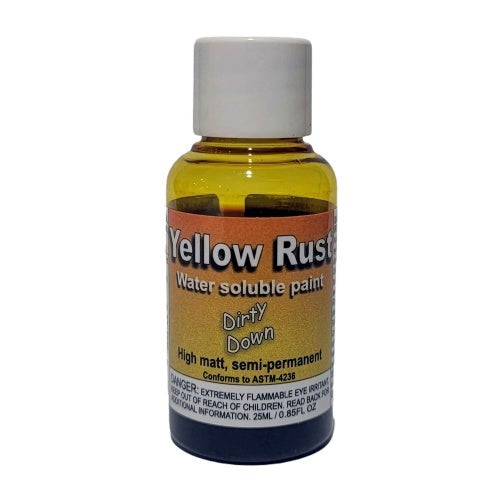
Apply yellow rust paint in the same way as our normal rust paint, by brush or airbrush/sprayer. Use on its own or with normal rust effect paint. A single coat of yellow rust is light yellow shade but the shade darkens as more coats are applied. If several coats are applied the colour darkens to a shade similar to that of normal Dirty Down rust effect paint. IMPORTANT: Before use: Thoroughly shake the pot with the ball bearing rattling and thoroughly stir inside the pot with an old brush until all the lumps are gone. For best results the pot and the surface being painted should be at room temperature or a little warmer. The colour could dry dark if the surface is too hot or too cold. Tip: keep the pot in your pocket against your skin for an hour before use and shake regularly with the ball bearing rattling. Repeatedly stir and shake the pot until all lumps have gone. It is very difficult to remove the lumps if the liquid is cool or cold. Usage Instructions: Always clean the brush in water or methylated spirit straight after use (not white spirit). Do not let the paint fully harden onto brush. The mixture will settle on the bottom of the pot. Thoroughly shake with the ball bearing rattling and stir before each and every use. Use paint straight from the pot. Replace the lid quickly during use to prevent the liquid from evaporating. Evaporation with cause the liquid to thicken and the colour to darken. To lighten shade add a little water. Do not add water into the paint pot, it’s best tip a little paint into a separate pot and then add small amounts of water. Or to lighten the colour, apply paint to a surface with a damp/wet brush. Or, after painting dab the wet or dry paint with a wet brush. Ensure surfaces are clean, dry and grease free. Test the paint on hidden surfaces before use to ensure compatibility and adhesion. Only apply to non-porous surfaces such as plastic and metal. Do not apply to porous/absorbent surfaces such as bare timber or paper. The paint can be applied to painted surfaces, but test first. If the effect does not form, try first sealing the surface with varnish. Our paint is water soluble and the effects of painting will be lost by washing in water or handling with wet hands. Do not expose paint to rain or splashing with water. Looks best when applied to a rough surface. To fill dents and grooves in surfaces, first cover the surface with paint, and then wipe the paint off the raised areas with a damp cloth (at an angle to the grooves), leaving some of the paint trapped. The wetter the cloth, the more paint removed. When dry, avoid scuffing/scratching the finished paintwork. For the best results it’s best to practise the different techniques listed below: To darken the shade apply more coats. Allow each coat to fully dry before applying another. Any number of coats of paint can be applied over the top of each other. For a broken, patchy effect apply to small areas/patches at a time and allow to dry – more in some areas, less in others. The shade will vary depending on the quantity applied. A thick coat of paint will dry a darker shade, and a thin coat of paint will dry a lighter shade. Further variations in shade can be created by dabbing a damp or wet brush, cloth or tissue onto the painted surface and then leaving to dry. As the water dries, the paint separates into shades of light and dark. The more water used, the greater the effect. This technique can be used after the paint has dried or while it is still wet. Another option is to simply splash water onto the paint and leave to dry – without dabbing. For a very dark shade, decant a small amount into a separate pot and allow the paint to evaporate. The more the paint evaporates, the thicker and darker the paint gets. Brush Application Dip the brush and immediately apply to the surface. For a patchy effect dab the paint onto a surface and keep dabbing in the same place until the paint dries. Any number of coats can be applied in this way. For a more even effect paint an even coat onto a surface. A dry, damp or wet brush can be used A different effect is obtained depending on whether a soft or stiff brush used to apply the paint. Fine Soft Brush: For very detailed work. Apply a small amount to the brush and apply directly to the surface. Larger Soft Brush: For apply larger amounts to larger areas. For a darker shade apply larger quantities and for lighter shades apply smaller quantities. Stiff Brush: Very light shades can be obtained by dabbing a very small quantity of paint onto a surface using a stiff brush. Allow the paint to dry slightly on the brush for a very light effect, similar to the “dry brushing” painting technique. Cloth/Tissue Application Pour on a cloth or tissue and dab onto a surface and keep dabbing in the same place until the paint dries. For a light shade apply a small amount at a time. For a darker shade apply a larger quantity. Spray Application Spray paint onto a surface straight from the pot using an air brush or pressure pot spray gun. Clean air brush immediately after use. These paints are water soluble and can be wiped off surfaces in two ways (even when fully dry): Using a damp cotton bud. Only dampen one end of the cotton bud. Wipe paint with the damp end first, and then with the dry end. The wetter the cotton bud, the more paint is removed. Using a sheet of kitchen roll (absorbent paper towel). First apply the paint onto the panels so that they are fully covered, and leave to dry. Flatter one end of a piece of kitchen roll, and dip this end into water. Remove most of the water from the flat end so that it’s only slight damp. This can be done by pushing the flat end against other dry pieces of kitchen roll. Gently press the damp flat end of kitchen roll against the dried paint, and twist the kitchen roll. Keep the kitchen roll in one place, do not wipe side to side across the surface. Some paint is left on the model and some removed. Some paint will have been wetted by the damp kitchen roll and will change shade to look darker. The wetter the paint gets, the darker the shade. Practice first to check how damp the kitchen roll should be and how much pressure to apply. Create different shades using water: Apply the paint to a surface and apply a small amount of water to the paint as it dries. This usually causes the colours to separate and dry different shades and more patchy. Water can be applied to the surface after the paint has fully dried or when the paint is still wet.
£7.80
Decal Medium improves the adherence of the decal and prevents the formation of air bubbles. It also acts as a cleaner and helps prepare the surface of your models before applying the decal. Before adding your decal, apply the Decal Medium with a brush on the surface of the model and then slide the decal from the paper to the surface. Next apply the medium over the decal and press down lightly with your finger or a humid cloth to eliminate excess liquid. This bottle contains 17ml of Decal Medium.
£2.95 £2.70

Airbrush Flow Improver is a medium to improve the flow & delay the drying of paint on the needle. We recommend adding 1-2 drops Flow Improver to 10 drops of paint in the cup of the airbrush.
£11.75 £10.60
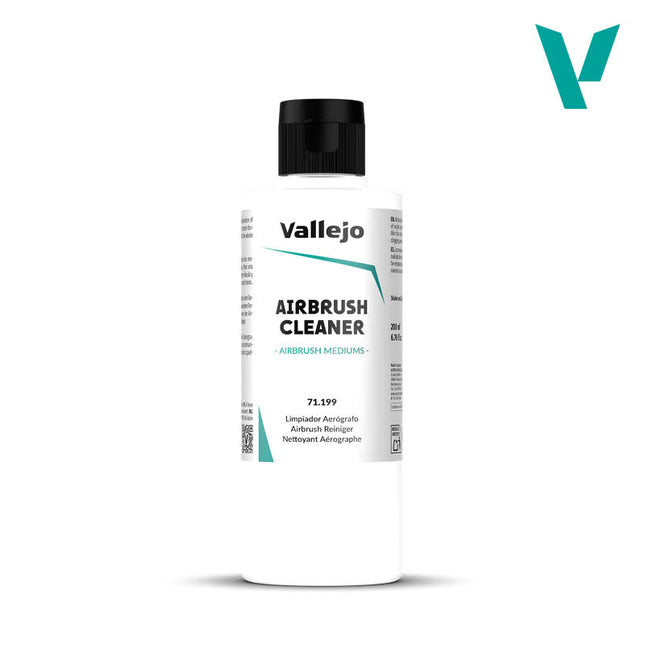
This airbrush cleaner is an indispensable product for cleaning your airbrush between colours. It eliminates all other colours used while also lubricating the interior of the airbrush without damaging the mechanism. This bottle includes 200ml of airbrush cleaner.
£8.75 £7.90

A perfect set for beginners and the budget-conscious painter! Three essential and easy-to-use brushes to get you started on your miniature painting journey. Each brush features high-quality synthetic bristles, made to last and perform, along with a comfortable grip. Please Note: One Hobby Starter Brush Set is supplied.
£17.00 £15.30
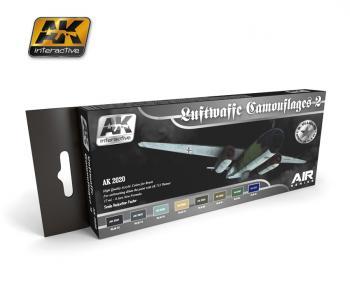
This set of eight acrylic paints is essential for painting models of seaplanes, aircraft wearing tropical camouflage schemes, and aircraft used at the end of the World War Two by the German Air Force. A profile guide is printed on the backside of the box. Our paints are not only historically accurate and specially formulated with top quality components; they also have been designed taking into account the scale reduction effect*. Our acrylic paints are ready to use straight from the bottle; simply shake, and the paint is ready to go. Dilution is not necessary when airbrushing AK acrylic paints; however, when painting camouflage or fine lines, add a few drops of our specially formulated thinner AK712. Useful for all acrylic paints, the AK712 improves the performance of the paint and is vastly superior to most other available thinners, resulting in a greater degree of coverage when applied by brush. This set contains: AK2021 RLM 72 AK2022 RLM 73 AK2023 RLM 78 AK2024 RLM 79 AK2025 RLM 80 AK2026 RLM 81 AK2027 RLM 82 AK2028 RLM 83
£23.00 £20.70
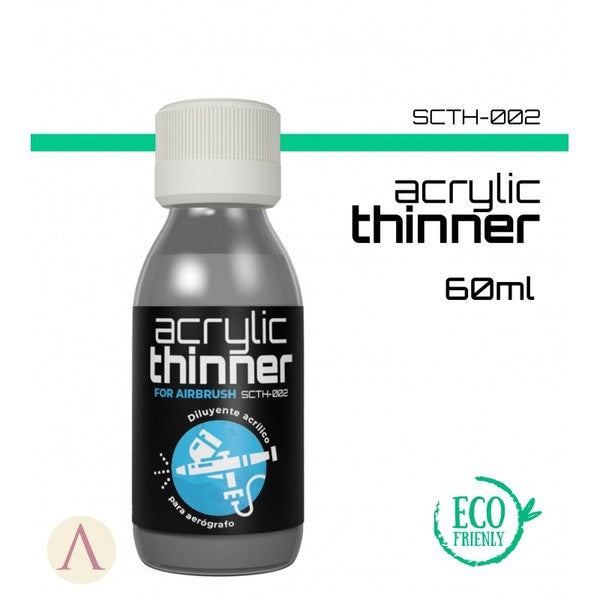
Renewed solventThe new composition is alcohol-free and non-flammable. It is specially designed to ensure excellent paint fluidity in the airbrush, without negative health and environmental impacts.
£4.70
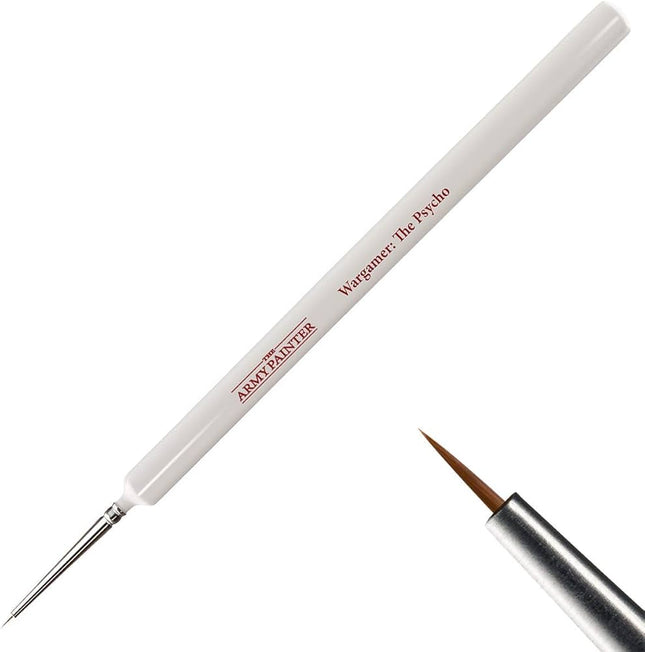
Experience the high-performance Bionic Bristles found only on the Wargamer brushes. This new synthetic brush technology offers unmatched precision and durability, perfect for every painting task. Ideal for hobbyists who demand performance and versatility. Please Note: One Wargamer: The Psycho brush is supplied.
£8.99 £8.10

One 17ml bottle of Vallejo Model Air - Nato Black supplied
£2.30
Ultrafine high quality autoleveling white primer, with great gripping force and resistance. It can be dulited with AK470 Xtreme Cleaner/Thinner, although it is ready to be applied by airbrush. To clean it is recommended to use AK470 Xtreme Cleaner/Thinner as well.
£7.99 £7.20
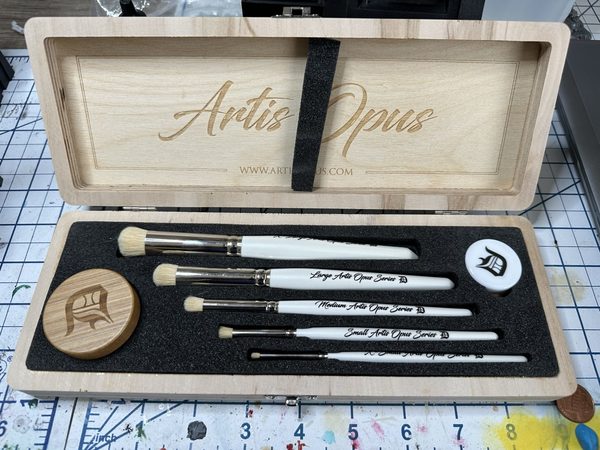
Contains -- Size XS Drybrush- Size S Drybrush- Size M Drybrush- Size L Drybrush- Size XL Drybrush- 3ml Brush Soap- Dampening pad
£72.00

Mecha Color, a range of acrylic airbrush colours, has been designed especially for painting Robots, Gundam, Transformer and action figures. The innovative formulation of the colours, although water-based, guarantees a maximum resistance to manipulation, impacts, friction, scratches and overall extreme wear. Once dry, the colour appears the same as the injected plastic colour, respecting all the kit’s surface details. The colours of the range have been carefully selected to provide the modeller with the shades most frequently used for painting all kinds of Mecha figures. The colours can be mixed with one another and diluted with Airbrush Thinner or Flow Improver. The range includes a series of metallic and fluorescent colours, weathering effects and auxiliary products such as primers, thinners, chipping Medium and varnishes.
£13.99 £12.60
Subscribe to our emails