
Sign up for our newsletter
Subscribe to our emails
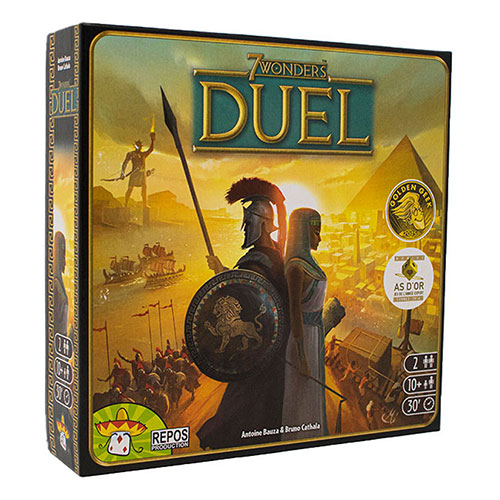
In many ways 7 Wonders Duel resembles its parent game 7 Wonders as over three ages players acquire cards that provide resources or advance their military or scientific development in order to develop a civilization and complete wonders.What's different about 7 Wonders Duel is that, as the title suggests, the game is solely for two players, with the players not drafting cards simultaneously from hands of cards, but from a display of face-down and face-up cards arranged at the start of a round. A player can take a card only if it's not covered by any others, so timing comes into play as well as bonus moves that allow you to take a second card immediately. As in the original game, each card that you acquire can be built, discarded for coins, or used to construct a wonder.Each player starts with four wonder cards, and the construction of a wonder provides its owner with a special ability. Only seven wonders can be built, though, so one player will end up short.Players can purchase resources at any time from the bank, or they can gain cards during the game that provide them with resources for future building; as you acquire resources, the cost for those particular resources increases for your opponent, representing your dominance in this area.A player can win 7 Wonders Duel in one of three ways: each time you acquire a military card, you advance the military marker toward your opponent's capital, giving you a bonus at certain positions; if you reach the opponent's capital, you win the game immediately; similarly, if you acquire any six of seven different scientific symbols, you achieve scientific dominance and win immediately; if none of these situations occurs, then the player with the most points at the end of the game wins.
£24.99 £22.50

Fluxx is a card game in which the cards themselves determine the current rules of the game. By playing cards, you change numerous aspects of the game: how to draw cards, how to play cards, and even how to win.At the start of the game, each player holds three cards and on a turn a player draws one card, then plays one card. By playing cards, you can put new rules into play that change numerous aspects of the game: how many cards to draw or play, how many cards you can hold in hand or keep on the table in front of you, and (most importantly) how to win the game. There are many editions, themed siblings, and promo cards available.
£20.00 £18.00
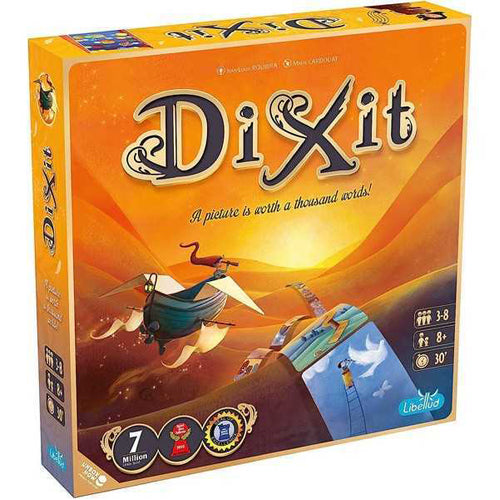
2010 Spiel des Jahres WinnerOne player is the storyteller for the turn and looks at the images on the 6 cards in her hand. From one of these, she makes up a sentence and says it out loud (without showing the card to the other players).Each other player selects the card in their hands which best matches the sentence and gives the selected card to the storyteller, without showing it to the others.The storyteller shuffles her card with all the received cards. All pictures are shown face up and every player has to bet upon which picture was the storyteller's.If nobody or everybody finds the correct card, the storyteller scores 0, and each of the other players scores 2. Otherwise the storyteller and whoever found the correct answer score 3. Players score 1 point for every vote for their own card.The game ends when the deck is empty or if a player scores 30 points. In either case, the player with the most points wins the game.The base game and all expansions have 84 cards each.
£29.99 £27.00
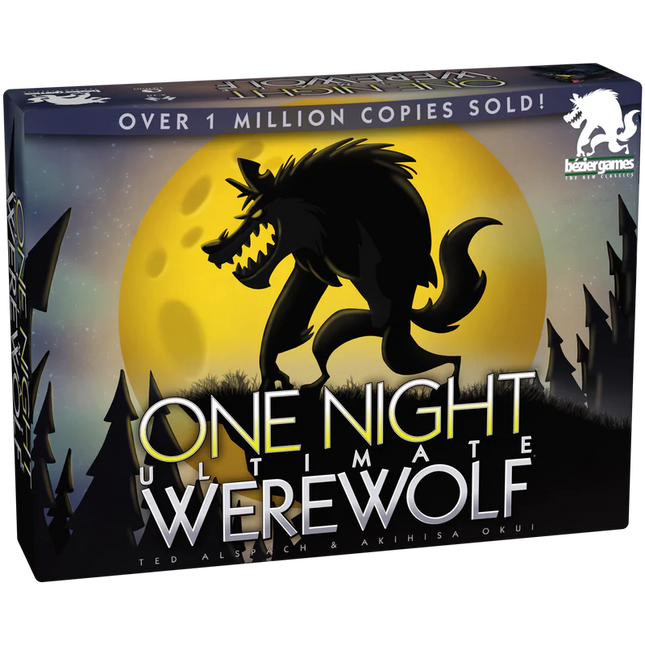
No moderator, no elimination, ten-minute games.One Night Ultimate Werewolf is a fast game for 3-10 players in which everyone gets a role: One of the dastardly Werewolves, the tricky Troublemaker, the helpful Seer, or one of a dozen different characters, each with a special ability. In the course of a single morning, your village will decide who is a werewolf...because all it takes is lynching one werewolf to win!Because One Night Ultimate Werewolf is so fast, fun, and engaging, you'll want to play it again and again, and no two games are ever the same.This game can be combined with One Night Ultimate Werewolf Daybreak.
£24.99 £22.50
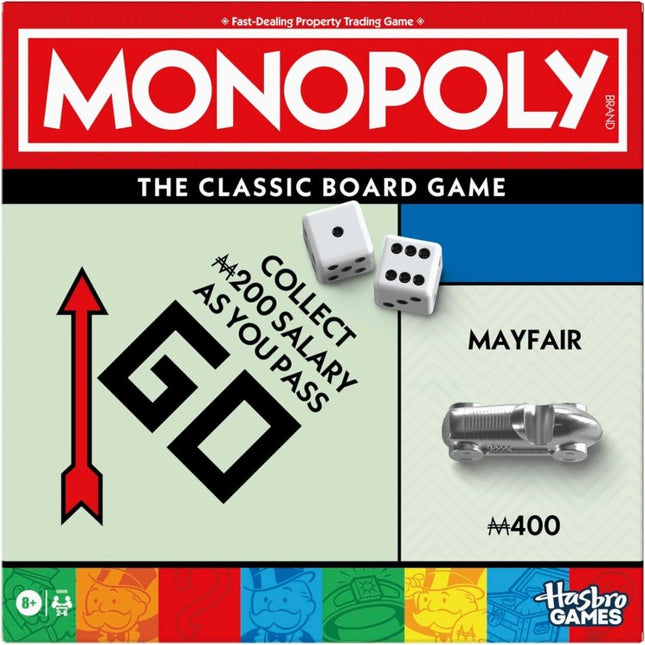
Players take the part of land owners, attempting to buy and then develop their land. Income is gained by other players visiting their properties and money is spent when they visit properties belonging to other players. When times get tough, players may have to mortgage their properties to raise cash for fines, taxes and other misfortunes.On their turn, a player rolls two dice and moves that number of spaces around the board. If the player lands on an as-yet-unowned property, they have the opportunity to buy it and add it to his portfolio or allow the bank to auction it to the highest bidder. If a player owns all the spaces within a colour group, they may then build houses and hotels on these spaces, generating even more income from opponents who land there. If they land on a property owned by another player, they must pay that player rent according to the value of the land and any buildings on it. There are other places on the board which can not be bought, but instead require the player to draw a card and perform the action on the card, pay taxes, collect income, or even go to jail. The goal of the game is to be the last player remaining with any money.
£22.00 £19.80
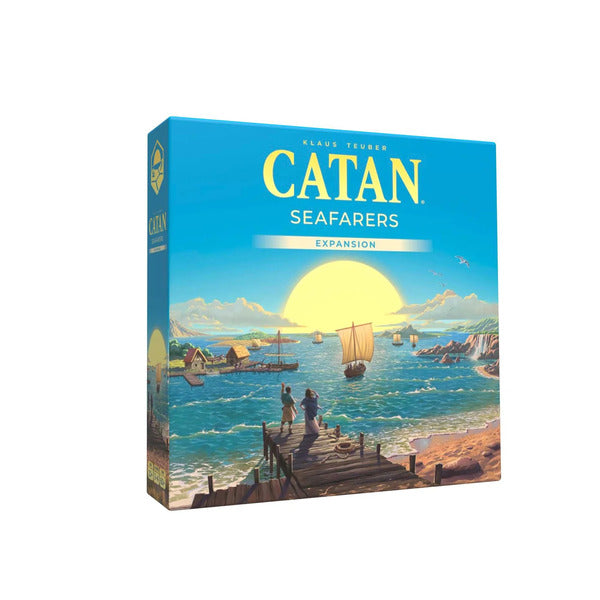
Not everyone’s content with a simple life on the shore. You? Your restless spirit cannot resist the call of the open sea! While your hometown grows and thrives, you and your rival Seafarers seek new thrills, planting fresh roots and building spectacular wonders on smaller islands in the Catanian archipelago. The rumours of gold and resources are so alluring that not even pirates, dense fog, or rough waters will keep you from your goal.
£49.99 £45.00
£8.00

Cat Fluxx is the purr-fectly chaotic card game for cat lovers everywhere!This feline-themed version of the classic Fluxx game features nine adorable Cats and their Human, with plenty of whiskered antics. Your cats will bask in Sunbeams, chase Balls of Yarn, and squeeze into Cardboard Boxes—but beware the Empty Food Bowl and dreaded Vacuum Cleaner! With ever-changing rules and endless replayability, Cat Fluxx is the ideal pick for casual game nights full of laughter, mischief, and meows. A cat-themed twist on the classic Fluxx card game Rules change as you play – every game is different Includes 9 unique cats and their human Features funny cards like the Vacuum Cleaner and Food Bowl Great for fans of humor, chaos, and cuddly cats
£19.99 £18.00
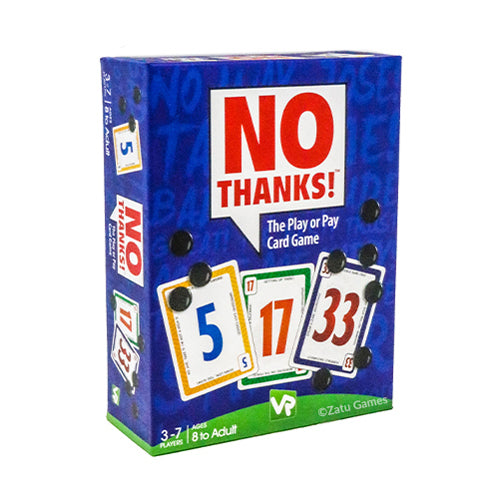
No Thanks! is a card game designed to be as simple as it is engaging.The rules are simple. Each turn, players have two options: play one of their chips to avoid picking up the current face-up card pick up the face-up card (along with any chips that have already been played on that card) and turn over the next cardHowever, the choices aren't so easy as players compete to have the lowest score at the end of the game. The deck of cards is numbered from 3 to 35, with each card counting for a number of points equal to its face value. Runs of two or more cards only count as the lowest value in the run - but nine cards are removed from the deck before starting, so be careful looking for connectors. Each chip is worth -1 point, but they can be even more valuable by allowing you to avoid drawing that unwanted card.The first versions of the game supported up to five players, but a 2011 edition supports up to seven.This game was originally published in Germany by Amigo as Geschenkt ...ist noch zu teuer!, meaning Even given as a gift, it is still too expensive!. Amigo's international edition, titled No Merci! (a delightful multi-lingual pun), had rules in several languages, including English. The game has subsequently been released in other countries under an assortment of names.
£12.00 £10.80

In this classic word game, players use their seven drawn letter-tiles to form words on the gameboard. Each word laid out earns points based on the commonality of the letters used, with certain board spaces giving bonuses. But a word can only be played if it uses at least one already-played tile or adds to an already-played word. This leads to slightly tactical play, as potential words are rejected because they would give an opponent too much access to the better bonus spaces.
£21.99 £19.80
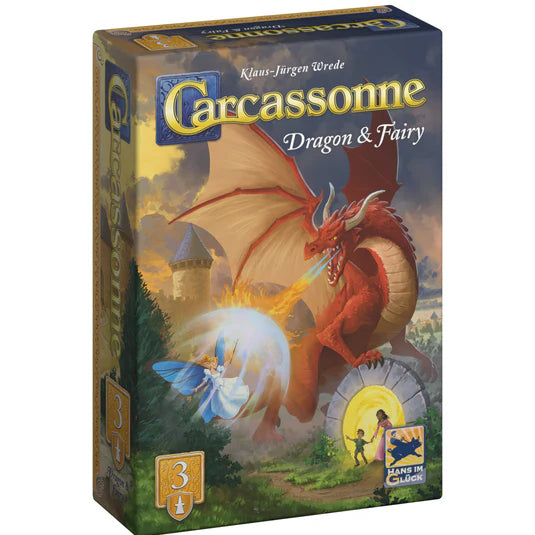
In this the Third expansion for Carcassonne, a hungry dragon roams the countryside. Plan ahead to stay clear of the dragon’s path, summon the fairy for protection or use magic portals to regain lost features. Contents: 26 Land Tiles, 1 Source and 1 Lake tile and Dragon and 1 Fairy Meeple
£14.99 £13.50

Make the right decisions to lead your civilization to prosperity!Lead one of the seven greatest cities of Antiquity. Develop your civilization on a military, scientific, cultural, and economic level. Once built, will your Wonder bring you glory for millennia to come? No downtime, renewed fun in each game and perfect balance regardless of the number of players.
£45.00 £40.50
Subscribe to our emails